Building on Brexit as 10th anniversary approaches
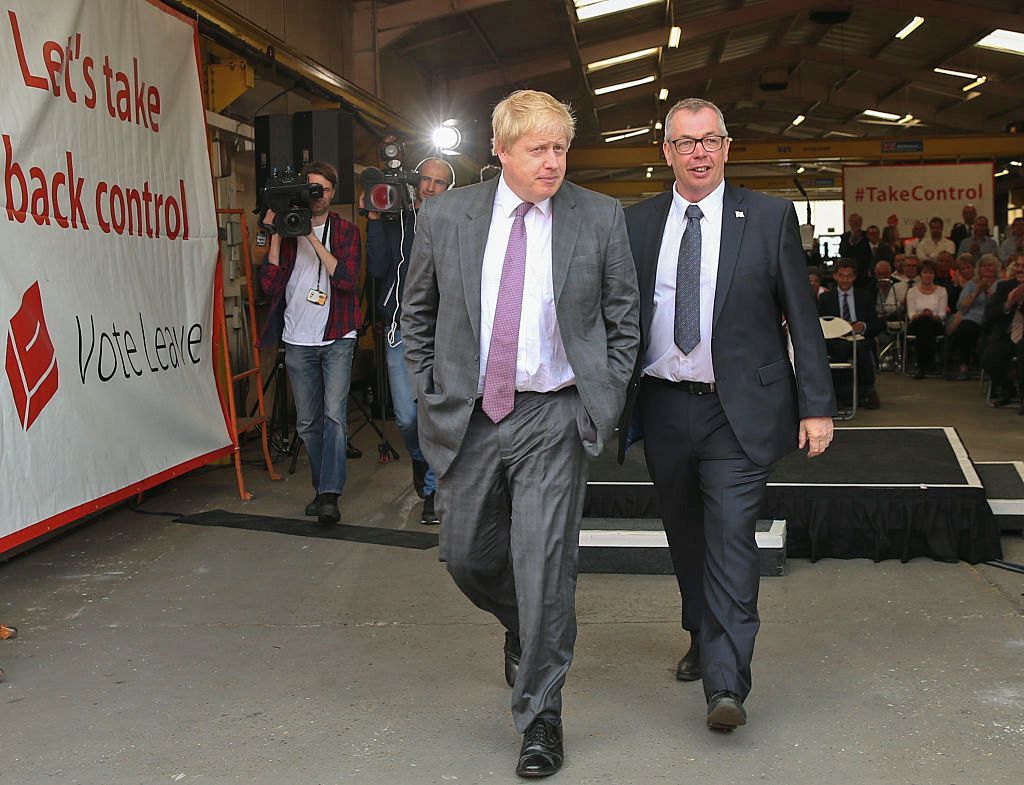
REIDsteel managing director Simon Boyd OBE, who campaigned for Brexit, has commented on the pros and cons of departure from the EU as the tenth anniversary of the referendum approaches.
He said that despite the best efforts of the establishment to frustrate the Brexit dividend, progress - although sluggish - has been and continues to be made.
He said that the full benefits of Brexit will not be realised until the government embraces the freedoms that the British people voted for: i.e. taking back control.
He said that Brexit is working but its benefits have not been capitalised upon and there is much more that needs to be done by Government for the UK to fully realise the opportunities.
He said that in this regard, this includes regulatory reform in the interest of British businesses which remain hamstrung by poor regulation derived from EU diktats despite the country no longer being a member of the EU ‘club’.
Simon said that both the Conservatives and, more lately, the Labour party have failed the country in this regard.
Simon was regional chair of Business for Britain South West during the EU Referendum campaign and has more recently campaigned to save steelmaking in the UK. He highlights that the action Government has taken this far to protect steelmaking would not have been allowed under EU rules.
According to the Parliament.UK website, in May 2019, the Government rejected British Steel's request for emergency financial assistance, stating that it was constrained by EU state aid rules. The company was subsequently placed into liquidation.
As a result of his work, Simon was made OBE in the New Year Honours for services to British steel manufacturing and more widely SMEs.
Simon is also a trustee of the Jobs Foundation, which is a charity that champions business as a force for good, as does the Dorset Chamber of Commerce and Industry where he sits as vice-president.
Simon said: “Brexit progress from 2016 was deliberately stalled by the establishment until 2020, following which less than a year later we had the Covid pandemic, economic volatility and geo-political tensions resulting in two wars. None of which was the fault of Brexit.
“Many people are trying to say that returning to the EU would stimulate growth in the UK but the facts do not support this.
“The UK economy has fared better than leading EU nations since Brexit and the current challenges have been caused by ill-conceived government policies as well as world events.
“Since the 2016 referendum, UK GDP has grown by 12.9% in total, according to figures from the Organisation for Economic Co-operation and Development (OECD) highlighted by economist Liam Halligan. That is more than the 12.5% in France, 10.3% in Italy and 6.3 % in Germany.”
“If we look at the statistics, trade deals are coming through although not as quickly as perhaps we would like but we now have a trade surplus outside the EU of £50bn while our trade deficit with the EU still sits at £89bn a year.
“Clearly more needs to be done and I do not want to see us returning to the debate over in or out and right or wrong.
“A democratic decision was made and government no matter the colour needs to deliver on that decision.”
Since Brexit, the UK has signed trade deals and agreements in principle with more than 70 countries, as well as one with the EU, including rollovers from EU deals and some new ones.
There have been deals with Japan, New Zealand, Australia, India, South Korea and most recently in May 2026, the Gulf Cooperation Council.
The UK has also joined the Comprehensive and Progressive Agreement for Trans-Pacific Partnership (CPTPP) and signed an Economic Prosperity Deal (EPD) with the US.
OECD figures show that the UK’s total global exports were second only to Canada as the fastest-growing in the G7 since 2016.
The UK’s good/services exports increased by more than 45.2% - behind Canada with 51.2% but ahead of the US with 42.9%, Italy with 42.4%, France with 37.6% and Germany with 31.8%.
When Great Britain joined the then European Economic Community in 1973, the nine member states accounted for 35 % of the global economy .
Today the EU generates 15pc of world GDP – a share that is expected to fall below 10pc by 2040.
Simon said: “Notwithstanding the above, the conditions the EU would insist upon for us rejoining would be akin to reboarding the Titanic upon condition that we surrender our life vests first.
“The EU did not work for us and to consider rejoining or getting closer will at worst cancel Brexit or at best not only impede progress but result in Brexit In Name Only (BRINO).
“The British people have always been resourceful and resilient. I firmly believe that the best is yet to come if only our incumbent government understands the important principle that economic growth comes from businesses.
“The way we are going to get out of the mess we are in now is through growth; it is current government policy that is hampering growth, not Brexit.
“Government is right to be wise about the threats of dictatorships around the world, and to maintain our own democratic decisions and freedom of speech. Of course, part of which means respecting the historic democratic decision of the British people in 2016.”
Simon added: “In this country we severely under-estimate the strength of ‘brand Britain’ overseas with its reputation for quality of workmanship, product and service.
“There is so much potential in the world outside of the EU and that is what we must focus on. This does not mean that we don’t want trade with our European friends but we must stay out of the Brussels club.”
The referendum vote was on 23 June 2016 but Britain did not officially leave until January 31, 2020 with a transition period until 31 December 2020 when it left the single market and customs union.
Labour pledged before the general election of 2024 that there would be no return to single market, freedom of movement or customs union but PM Keir Starmer has since then promised a ‘full reset’ with EU.