REIDsteel managing director demands British Steel deal on China trip
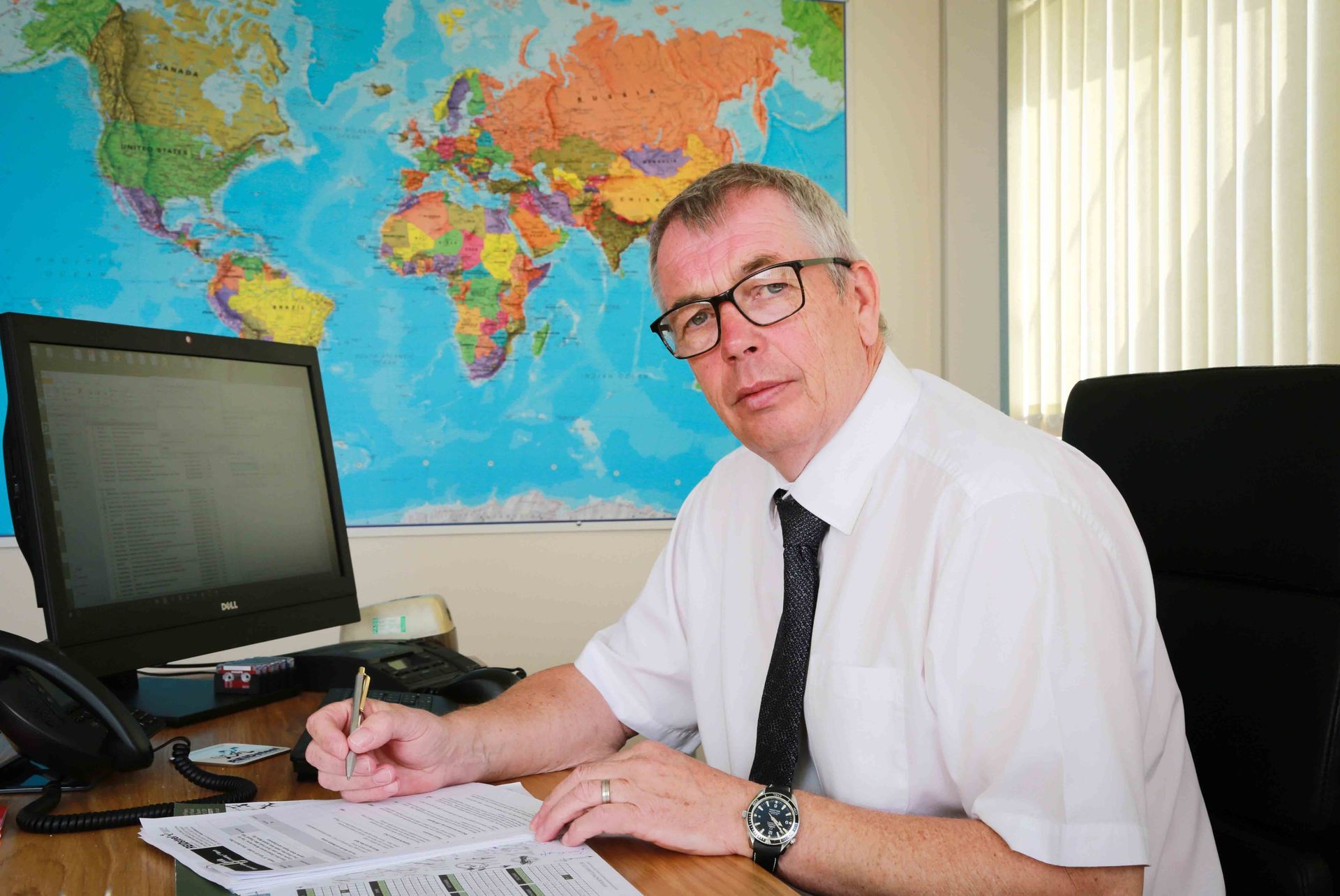
REIDsteel managing director Simon Boyd has called on PM Keir Starmer to resolve the future of British Steel on his impending visit to China.
Simon, who was made OBE in the New Years Honours for services to steel manufacturing and SMEs, insisted that the government must seal a deal in Beijing to bring the company under full public ownership.
The government seized control of British Steel in April 2025 to stop its Chinese owners Jingye from closing the UK’s only two remaining blast furnaces.
Simon said: “There can be no prevarication or delay – the government must return with an agreement for full public ownership of British Steel.
“The blast furnaces at British Steel in Scunthorpe will reach the end of their working lifespan within the next five to 10 years, so there is no time to lose.
“Investment is required for two new blast furnaces which can make virgin steel from iron ore with carbon capture technology along with two new Electric Arc Furnaces (EAF) which use scrap steel.
“But that can only happen if British Steel is taken into public ownership with a long-term vision and funding which can turn the company into a viable, profitable business providing a return for the taxpayer.
“Following which, private-public ownership can be considered with a model that forbids the company from ever again being sold to a foreign body.”
Simon added: “The British people have to ask themselves whether or not they want to retain steelmaking in the UK.
“If we lose our blast furnaces we will be one hundred per cent reliant on imports of foreign virgin steel and foreign EAF steel that suit our mills.
“EAFs are a viable investment but we need two of these and they need to be built on British Steel land and they must belong to British Steel.
“There are a multitude of uses for steel produced by EAFs but the fact remains that for our country to lose the capability to make virgin steel we will never again be able to make the highest grade steel possible.
“Currently there is only enough scrap metal globally to meet one third of the world demand for steel, so there is clearly a need for virgin steel.
“It would be an act of great national harm if we were to exclude ourselves as a maker of virgin steel for which there is worldwide demand which is currently fulfilled by some of the dirtiest producers on the planet.
“If we invest in blast furnaces with carbon capture technology we can be the greenest producer and the market leader of virgin steel production.
“It will remain critical for our country’s economy, skillset, infrastructure and nationally important sectors such as defence and rail to be able to make our own virgin steel.”
PM Starmer is expected to visit Beijing this week with Chancellor Rachel Reeves and Business Secretary Peter Kyle.
It follows the government’s approval of controversial plans for a new super-embassy for China in the heart of London.
The government is running British Steel at a cost to the taxpayer but Jingye remains the legal owner.
The company is expected to demand compensation of upto £1bn for loss of ownership although the government is not prepared to meet this figure, according to latest reports.
The UK steel sector directly employs 33,700 people and a further 42,000 in the wider supply chain.
British Steel is one of the leading steel manufacturers in Europe, with the capability to produce around two million tonnes of quality steel products annually.
Speaking on economist Liam Halligan’s When the Facts Change podcast, Simon invited the Secretary of State for Business and Trade Peter Kyle, Conservative leader Kemi Badenoch, Reform leader Nigel Farage and deputy-leader Richard Tice and Lib Dem leader Ed Davey to meet with him and fellow steel firm bosses to discuss the future of steel in the UK.
This would include the future of British Steel and net zero driven procurement specifications and policies that exclude 25-30% of contracts being fulfilled in the UK by British Steel and encourage cheap imports.
Simon previously campaigned to save British Steel when the blast furnaces came under threat last March.